

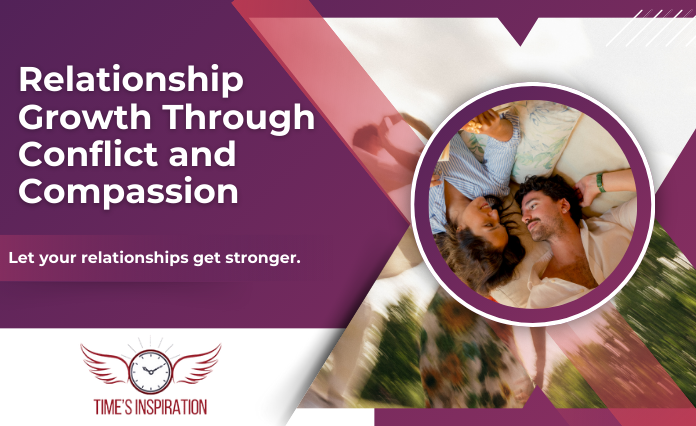
Relationship Growth Through Conflict and Compassion
- December 29, 2025
- 0
Relationship Growth Through Conflict and Compassion: People often think that conflict is bad for relationships. We learn to avoid it, hide it, or be afraid of it. A

To inspire, educate, and help people of all ages with both lack of motivation and mental health awareness. If you want to achieve better success in life, build strong relationships, become a good leader, and be an idol to your parents, then we will drive you to long-lasting development. Email Us: info@timesinspiration.com
Relationship Growth Through Conflict and Compassion: People often think that conflict is bad for relationships. We learn to avoid it, hide it, or be afraid of it. A
Relationship Growth Through Conflict and Compassion: People often think that conflict is bad for relationships. We learn to avoid it, hide it, or be afraid of it. A lot of people think that if there is tension in a relationship, something is wrong.
But this is the truth:
Conflict is necessary for healthy partnerships to thrive.
They grow by how you deal with disagreement.
Conflict does not indicate failure.
It shows that things are different.
When two people with different experiences, feelings, and points of view get together, it’s normal for them to be different.
The strength of a relationship is not based on the lack of conflict, but on the presence of compassion.
Connect with our other social media Platform !
Relationships don’t get weaker when conflict meets compassion.
They get deeper.
Everyone thinks differently.
No two people talk to each other in the same way.
No two persons have the same past that affects their emotions.
The following things produce conflict:
Not getting into fights doesn’t help relationships.
It hurts them slowly.
Resentment that isn’t spoken forms barriers.
Silence makes things far away.
When you don’t say how you feel, you pull away emotionally.
When handled carefully, conflict becomes a chance, not a danger.
Most of the time, it’s not what is said that hurts a relationship, but how it is conveyed.
When conflict includes, relationships get worse.
But relationships get stronger when disagreement involves:
This is when emotional intelligence is most important.
Being compassionate doesn’t entail agreeing with everything.
It involves deciding to understand before you act.
“I may not see it your way, but I want to know.”
“I care about how you feel, even when I’m hurt.”
“We’re still on the same team, even if we don’t agree.”
When compassion comes into play, the nervous system calms down.
Defensiveness goes down.
Trust grows stronger.
Conflict turns into a bridge, not a battlefield.
Conflict may achieve powerful things when it is handled with care:
People feel confident talking about their problems again in the future when they know they are being heard.
Respectful conflict indicates that people can differ without leaving or rejecting each other.
Conflict shows what people need but don’t say, what they are afraid of but don’t say, and what they don’t want to talk about.
Every time a problem is handled, couples, friends, or coworkers get better at talking to each other.
Conflict shows where you need to grow, whether it’s in your relationships, your mind, or your emotions.
Fear is the main reason for most conflict reactions.
Fear of:
Logic goes out the window when fear takes hold.
That’s why compassion is so important: it stops fear and brings emotional balance back.
Triggers are generally based on things that happened in the past, not things that are happening right now.
A loud voice may bring back memories of traumatic events from childhood.
Silence can make people afraid of being left behind.
Criticism might revive old wounds.
Knowing what triggers you can help you stop blaming others and start feeling sorry for them.
Instead of saying, “Why are you acting like this?”
Ask, “What could this reaction be guarding?”
Here are some useful techniques to turn disagreement into growth:
Silence lets feelings settle and stops people from saying things they might regret.
Ask questions. Think about how you feel. Don’t interrupt.
Validation doesn’t mean you agree. It requires recognizing how you feel.
Say, “I feel like I’m not being heard when…”
“You never listen.”
Curiosity makes people honest. Accusation makes people fight back.
Take a deep breath. Take it easy on your body. Calm responses make talks safe.
Winning an argument can hurt your emotional bond.
When there is no compassion, conflict makes:
This causes emotional isolation over time, even if the relationship is still there physically.
Being kind does not make bad behavior okay.
It lets people be responsible without feeling bad about it.
Compassion that is good for you includes:
When kindness and responsibility are both present, growth happens.
Every partnership has its flaws.
But solid partnerships know how to fix things.
This is what repair looks like:
Repair educates the nervous system that pain doesn’t always mean death.
Emotional closeness grows when people feel secure being honest, even when they don’t agree.
You don’t get close to someone when things are easy.
It is developed during hard talks that are handled with care.
Avoidance creates emotional distance.
Unmet needs cause anger.
Feelings that are kept inside come out later, and they often do damage.
Conflict is not something that healthy partnerships avoid.
They get through it with kindness.
Every disagreement teaches something:
When handled with kindness, disagreement turns into wisdom.
Compassion grows with:
It begins with being kind to yourself.
It can only then reach out to others.
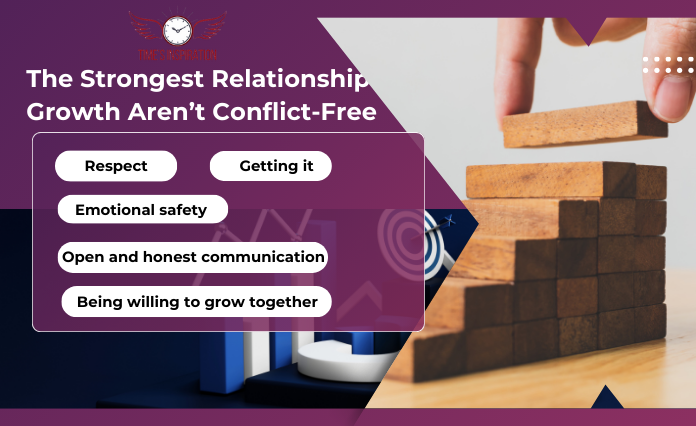
They are based on:
They don’t crack under strain.
They change as they go through it.
Disagreement doesn’t mean the end of relationship.
It’s a chance to make it stronger.
When kindness is at the center of a discourse, relationships change.
They grow safer.
More powerful.
More important.
You can’t grow if you avoid discomfort.
It happens when you show it kindness.
Let conflict be a teacher.
Let kindness lead you.
Let your relationships get stronger.


Subscribe Now